Eleonora N. Volpe. Screenwriting and Storytelling for Film and Television

This is not a robbery!

We shot a single scene from the screenplay Whispering Place with virtually no budget. One of the main characters — the perpetually unlucky one — finds a diamond and, after three jewelers tried to cheat, he decides to have the stone evaluated with the help of a gun. Unfortunately, the situation spirals out of control…

Rainer

In this teaser — also made to promote the Whispering Place project — we shot some general footage with actor, creator and producer Peter J. Sinclair who plays Rainer, a mysterious man living as a hermit in a forest…

A teaser for the project The Slave is only available on request for copyright reasons.
Here is just a choice of stills for a feel of style and location.

SCRIPT FOR SPOT & CLIP

A wide range of story concepts and scripts for commercials and music videos, including scripts for 45, 30 and 15-second television spots.

FEEDBACK

“The script The Slave is great. A really atmospheric, visual story“.
Eleanor Bowman
Director of Photography, Ireland/UK
“The Slave is a subtle script with great depth and complexity at its heart. It is an atmospheric and haunting story of loneliness, isolation, fear, loss and separation. It is a story of the human condition.”
Karen Griffin
Actress, Ireland
“I really enjoyed reading The Slave, the script is so beautifully visual and I think Lisa would be a great role for any young actor to play. As the film is mainly focused on two characters, it has potential to be something really special.”
Eva-Jane Gaffney
Actress, Ireland

SCRIPTS FOR FEATURE FILMS

The Slave – created in 2012 – Script for a contemporary drama and a novel
The Three Messiahs – created in 2020 – Script for a thriller (work in progress)
Where the Mermaids Sing – created in 2020 – A comedy-drama feature project
Parallel Lives – created in 1987 – Philosophic fantasy feature project  (work in progress)
Touch and Go – 2008 – A thriller co-written with Lindsay Sedgwick, Ireland
The Lost Gun – created in 2005, written in 2008 – Thriller developed for the Samson Films Production, Ireland
Winter – created in 1992– Period drama optioned and developed by the Merchant/Ivory Production, UK, between 1997 and 2005

SCRIPTS FOR SHORT FILMS

A Wake
Best dog’s friend
Moments
The Violin and the Pneumatic Hammer
Drawers
The Astronaut
Lady Macbeth – series GOTHICA
Albrecht – series GOTHICA
Faustus – series GOTHICA
Pygmalion – series GOTHICA
Little Apocalypses
The Blind
Birthday

SCRIPTS FOR TV SERIES

Double Dolan –  Script for a detective series
Camera Obscura – Script for a period drama series
Hanna’s Shame – Project for a biopic inspired by Dereck Linster’s Autobiography
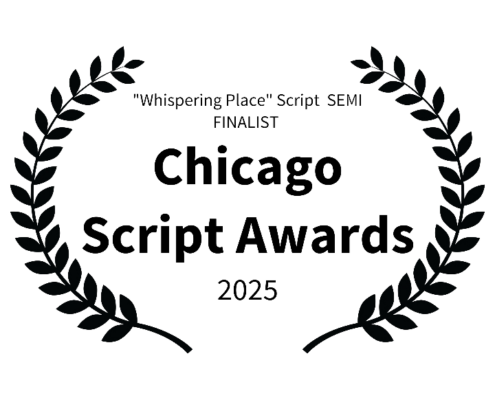
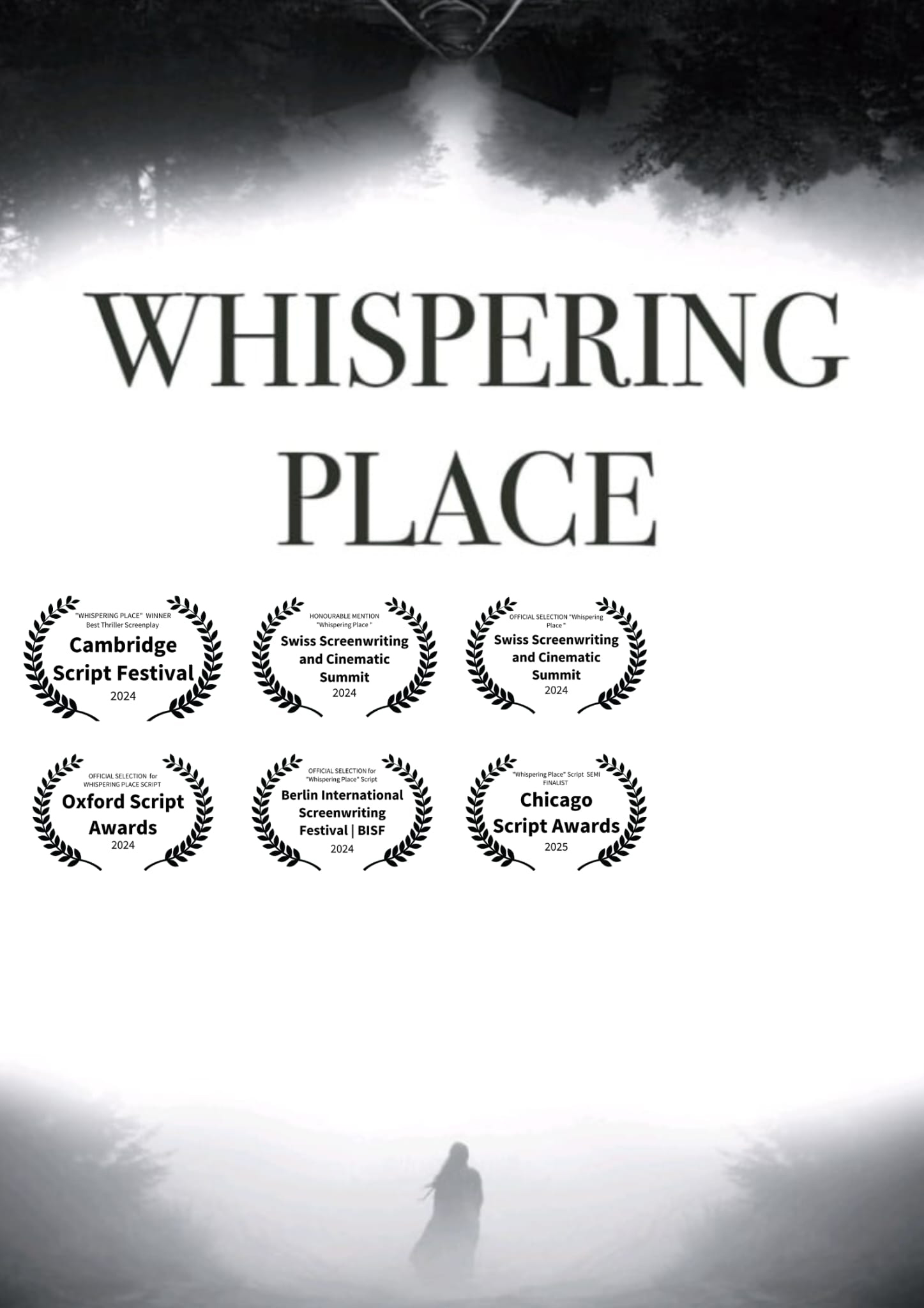
Whispering Place – Script for a thriller TV mini-series
One was there, One wasn’t and the Third One Died– Script for a period drama series and a novel (The Paper Man).

NARRATIVE

“Italo Calvino Literary Competition”

Summary and Review

 The Paper Man [L’Uomo di Carta] – A novel structured like a screenplay, featuring a tale of three men, as the subtitle says “One Was There, Another Wasn’t and the Third One Died”is set between 1797 and 1801. Tsar Paul the First brooks no contradiction; consequently, any document he signs automatically becomes law. What happens, then, when a bureaucratic error decrees one man dead while another—who does not exist in the flesh—appears on paper? This one mix-up forces the first man to abandon court life and all it entails (career, romance and high society), while the second one receives honors and offices he cannot truly enjoy. How could he? He does not exist. Thus begins the journey of young Astrov, the man declared dead, across the countryside of Tsarist Russia, where he encounters arrogant squires and exploited peasants. He frees a young boy, Vania, from serfdom; from that moment on, the boy becomes his smart and loyal traveling companion. A second life begins for Astrov. Thanks to his violin skills, he earns money and respect, while the document certifying his death saves him from a completely unjust conviction for complicity in murder. In their wanderings, Astrov and Vania stumble upon the community of Utopia, founded by an aristocrat. Having granted freedom to his serfs and ceded his lands, this nobleman launched a social experiment inspired by the philosophies of Plato and Tommaso Campanella, a place where noble titles have been abolished and everyone contributes to the collective good while simultaneously pursuing their own passions and artistic inclinations. Astrov and Vania will stay in Utopia for three years, finding the opportunity to mature and give a new meaning to their lives. Running parallel is the story of court intrigues, culminating in the conspiracy that led to the strangulation of Paul, an episode illustrating both the ferocity and the fragility of power.
THE JURY’S EVALUATION: A novel crafted with great skill, originally intended, as the author herself notes, to become a film in which a fictional narrative is grounded in precise historical facts. Eleonora clearly devoted significant time and energy to historical research, as evidenced by the numerous, meticulous footnotes. This rigor lends substance to the novel, allowing the reader to focus fully on the adventures of Astrov and his young friend. The book is well-constructed; its screenplay-like structure ensures the reader is always oriented within a clearly defined time and place, so that shifting from the remote countryside to the Emperor’s opulent bedchamber never leads to confusion. The narrative flows smoothly, featuring a writing style that adapts to the various characters and pays close attention to their cultural development (such as the expansion of Vania’s vocabulary and his gradual adoption of the correct verb tenses). A subtle irony runs through the story, fittingly so, given the Emperor’s emotional outbursts and the paradoxical situation in which Astrov finds himself. In essence, a good example of a mix between history and invention and, at the same time, a graceful Bildungsroman which is also a philosophical novel. The Reading Committee Italo Calvino Prize XVII editionREADERS’ FEEDBACK “The Paper Man” – A work noted for its inventiveness, both acrimonious and light-hearted, with which it reconstructs, according to the schemes of the philosophical novel, a picture of Russia in the last part of the Grand Siècle.
The Italo Calvino Award jury
XVII edition, Italy

SCRIPT FOR SPOT & CLIP

A wide range of story concepts and scripts for commercials and music videos, including scripts for 45, 30 and 15-second television spots.

SCRIPT PER SPOT & CLIP

Un gran numero di soggetti e script per spot pubblicitari, clip musicali e di sceneggiature per spot televisivi (45, 30 e 15 secondi)

FEEDBACK

“The script The Slave is great. A really atmospheric, visual story“.
Eleanor Bowman
Director of Photography, Ireland/UK
“The Slave is a subtle script with great depth and complexity at its heart. It is an atmospheric and haunting story of loneliness, isolation, fear, loss and separation. It is a story of the human condition.”
Karen Griffin
Actress, Ireland
“I really enjoyed reading The Slave, the script is so beautifully visual and I think Lisa would be a great role for any young actor to play. As the film is mainly focused on two characters, it has potential to be something really special.”
Eva-Jane Gaffney
Actress, Ireland

SCRIPTS FOR FEATURE FILMS

The Slave – created in 2012 – Script for a contemporary drama and a novel
The Three Messiahs – created in 2020 – Script for a thriller (work in progress)
Where the Mermaids Sing – created in 2020 – A comedy-drama feature project
Parallel Lives – created in 1987 – Philosophic fantasy feature project  (work in progress)
Touch and Go – 2008 – A thriller co-written with Lindsay Sedgwick, Ireland
The Lost Gun – created in 2005, written in 2008 – Thriller developed for the Samson Films Production, Ireland
Winter – created in 1992– Period drama optioned and developed by the Merchant/Ivory Production, UK, between 1997 and 2005

SCRIPTS FOR SHORT FILMS

A Wake
Best dog’s friend
Moments
The Violin and the Pneumatic Hammer
Drawers
The Astronaut
Lady Macbeth – series GOTHICA
Albrecht – series GOTHICA
Faustus – series GOTHICA
Pygmalion – series GOTHICA
Little Apocalypses
The Blind
Birthday

SCRIPTS FOR TV SERIES

Double Dolan –  Script for a detective series
Camera Obscura – Script for a period drama series
Hanna’s Shame – Project for a biopic inspired by Dereck Linster’s Autobiography
Whispering Place – Script for a thriller TV mini-series
One was there, One wasn’t and the Third One Died– Script for a period drama series and a novel (The Paper Man).

NARRATIVE

“Italo Calvino Literary Competition”

Summary and Review

 The Paper Man [L’Uomo di Carta] – A novel structured like a screenplay, featuring a tale of three men, as the subtitle says “One Was There, Another Wasn’t and the Third One Died”is set between 1797 and 1801. Tsar Paul the First brooks no contradiction; consequently, any document he signs automatically becomes law. What happens, then, when a bureaucratic error decrees one man dead while another—who does not exist in the flesh—appears on paper? This one mix-up forces the first man to abandon court life and all it entails (career, romance and high society), while the second one receives honors and offices he cannot truly enjoy. How could he? He does not exist. Thus begins the journey of young Astrov, the man declared dead, across the countryside of Tsarist Russia, where he encounters arrogant squires and exploited peasants. He frees a young boy, Vania, from serfdom; from that moment on, the boy becomes his smart and loyal traveling companion. A second life begins for Astrov. Thanks to his violin skills, he earns money and respect, while the document certifying his death saves him from a completely unjust conviction for complicity in murder. In their wanderings, Astrov and Vania stumble upon the community of Utopia, founded by an aristocrat. Having granted freedom to his serfs and ceded his lands, this nobleman launched a social experiment inspired by the philosophies of Plato and Tommaso Campanella, a place where noble titles have been abolished and everyone contributes to the collective good while simultaneously pursuing their own passions and artistic inclinations. Astrov and Vania will stay in Utopia for three years, finding the opportunity to mature and give a new meaning to their lives. Running parallel is the story of court intrigues, culminating in the conspiracy that led to the strangulation of Paul, an episode illustrating both the ferocity and the fragility of power.
THE JURY’S EVALUATION: A novel crafted with great skill, originally intended, as the author herself notes, to become a film in which a fictional narrative is grounded in precise historical facts. Eleonora clearly devoted significant time and energy to historical research, as evidenced by the numerous, meticulous footnotes. This rigor lends substance to the novel, allowing the reader to focus fully on the adventures of Astrov and his young friend. The book is well-constructed; its screenplay-like structure ensures the reader is always oriented within a clearly defined time and place, so that shifting from the remote countryside to the Emperor’s opulent bedchamber never leads to confusion. The narrative flows smoothly, featuring a writing style that adapts to the various characters and pays close attention to their cultural development (such as the expansion of Vania’s vocabulary and his gradual adoption of the correct verb tenses). A subtle irony runs through the story, fittingly so, given the Emperor’s emotional outbursts and the paradoxical situation in which Astrov finds himself. In essence, a good example of a mix between history and invention and, at the same time, a graceful Bildungsroman which is also a philosophical novel. The Reading Committee Italo Calvino Prize XVII editionREADERS’ FEEDBACK “The Paper Man” – A work noted for its inventiveness, both acrimonious and light-hearted, with which it reconstructs, according to the schemes of the philosophical novel, a picture of Russia in the last part of the Grand Siècle.
The Italo Calvino Award jury
XVII edition, Italy
READERS’ REVIEWS
“The Paper Man” – A novel to read and then read again. A genuine historical novel, a great pleasure to read it. By the end, one might wish to be Klim, but everyone would wish to be Astrov. Among other reflections, this novel confronts us with a sensation that is both strikingly modern and harrowing—in an era where image is everything—of how little it takes to become invisible to most people. And while it is true that life can be “a long battle in the darkness,” as one of the characters puts it, this book pierces that darkness; it is an excellent way to “use time rather than let it slip away.” Congratulations!
Domenico Addezio
Verified Purchase on Amazon.it 
“The Paper Man” – The best book I’ve read this summer. Truly original, well-crafted, and compelling, the kind of novel one happily reads a second or even a third time.
Verified Purchase on Amazon.it
 “The Paper Man” is Eleonora Volpe’s debut novel, set in late 18th-century Russia, and there are many reasons why it deserves to be read. Instead of a traditional narrative style, it employs a screenplay-like structure, an original choice that allows the reader to better visualize the setting and follow the extraordinary web of interwoven stories more effectively. These are tales of power, love, death, and life—or rather, lives in the plural—unfolding through the adventures of three protagonists introduced enigmatically in the subtitle: One Was There, Another One Wasn’t and the Third One Died.  The setting is complemented by a series of notes, observations and facts that allow the reader to enrich their knowledge of Tsarist Russia and gain insight into the feudal power, which culminated in the Revolution. The author’s hand is unsparing in recounting episodes that vividly convey what life was like—and how little it was worth—for the masses of serfs; yet, the ruthlessness of the hand wielding the pen is tempered by a gentle, ironic smile and a graceful sense of proportion. There is no indulgence or self-satisfaction here, but neither is there detachment or neutrality. Tolstoy and Gogol. Gogol and Tolstoy. I like to recall two lines that capture the essence of this. One is spoken by the protagonist, Alexander Pavlovitch Astrov—a military officer—reminding his physician father: “…But you said that the art of killing men brings more honour than the art of healing them.” Astrov is a character who rivals the enchantment and reality found in Gogol’s surreal imagination, with final touches reminiscent of Woody Allen’s *A Midsummer Night’s Sex Comedy*. The other line concerns Tsar Paul, whose ferocity manifests with natural ease and nonchalance, coexisting with grace, refined sensitivity and exquisite manners: “Paul had a sensitive heart and loved beautiful things. One of these was the young Anna Lopukhina…” Naturally, the plot includes a court conspiracy sketched, or rather embroidered, with an unusual narrative pace reminiscent of a television drama. The style is never heavy-handed, yet highly effective. The story is set in a world of privilege and elegance nourished by the pain, tears, and blood of the exploited serfs, yet the allusion to the eternal nature of Power, in whatever form it takes, is unmistakable. Power is always driven, step by step, toward abuse and oppression, toward a cynicism and malice of spirit masked by layers of refinement; inevitably, the dazzling splendour of places like Versailles and the Kremlin—splendour still admired today—descends into the darkness of boundless obtuseness. And ultimately, they meet the end they deserve…
Pino Nicotri
Journalist, Writer, Essayist
(Journalist for *L’Espresso*, former correspondent for the daily la Repubblica and a co-founder of *Il Mattino di Padova* and *La Tribuna di Treviso*)
“The Paper Man” – Finished reading the book. It’s wonderful!!! I truly loved it. The plot is intriguing, the story is well-constructed and the historical references are precise and clear. The writing features vivid and touching imagery, some of it so beautiful it almost hurts. 
Viviana Pietrantoni

OTHER WORK

A Glass Voyage – Second historical novel, work in progress
The Slave   – Script (in English) and novel (in Italian)
Fragments – a collection of short stories
Gothica  – four Medieval stories: Pygmalion, Albrecht, Lady Macbeth, Faustus